
Curating an audience
We spent a long time thinking about how to intentionally curate the audience for our event. From the beginning, we were against making our events public through widespread advertising such as Instagram ads or flyers. Instead, we wanted attendance to grow organically through trusted networks.
Before the event
Of course, there's a delicate balance between attracting the right audience and reaching enough people to create a successful event. We relied on our wider community to spread the word, trusting that they would invite like-minded people who aligned with the spirit of what we were building.
Our sign-up form, which acted as the first stage of our vetting process to reach the right audience. Alongside basic information such as name and email address, the only required question was: What do you hope to experience at our event(s)? We weren't looking for a "right" answer. Rather, we wanted to see that people understood the kind of event they were signing up for and were willing to put thought into their response. We personally read every submission before sending invitations, and fortunately, people understood the assignment.
At the event
On the night, we stationed one of our team members at the door to welcome guests, have a brief chat as they arrived, and, when appropriate, do a light-hearted vibe check while reminding them of our house rules. To support this door policy, we only sold tickets at the entrance rather than in advance. However, this approach also came with a significant challenge: we had no real sense of how many people would actually attend until the event began. Even with a healthy number of sign-ups, predicting our turnout proved difficult. Looking back, I'm still not convinced this is the best model going forward. Small events operate on very tight margins, and committing to an event that ultimately has a low turnout would result in a substantial financial loss. Although we managed to avoid that, we definitely felt quite worried in the weeks and days leading up to our event (and on the night!)
Beyond the door, we also designated 1-2 people per shift to our awareness team. Their role was to circulate throughout the venue, checking in on guests and paying particular attention to the playrooms to ensure everyone felt safe and supported. During their shifts, they wore light-up collars so they could be easily identified by anyone who needed assistance (or just wanted to chat).
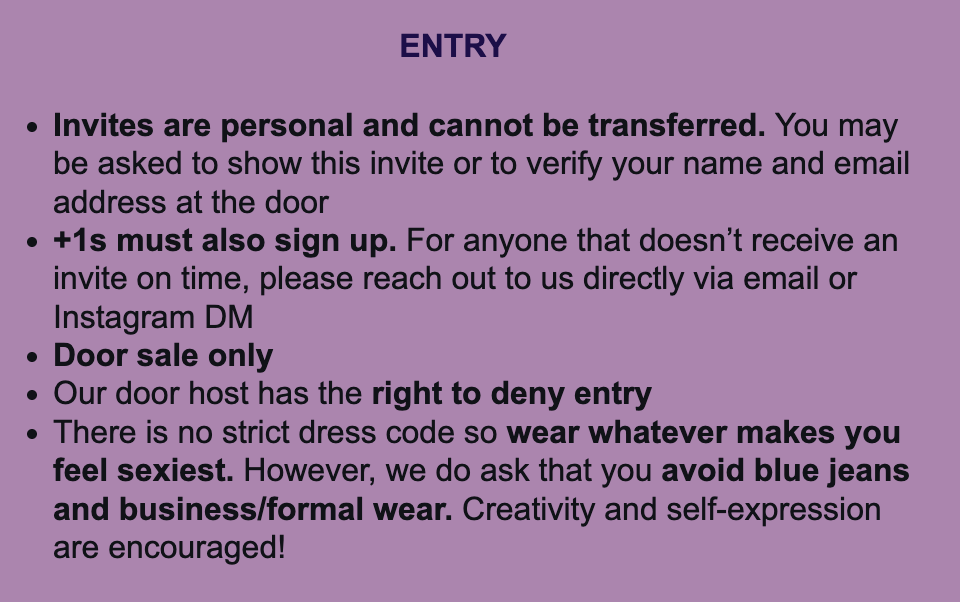
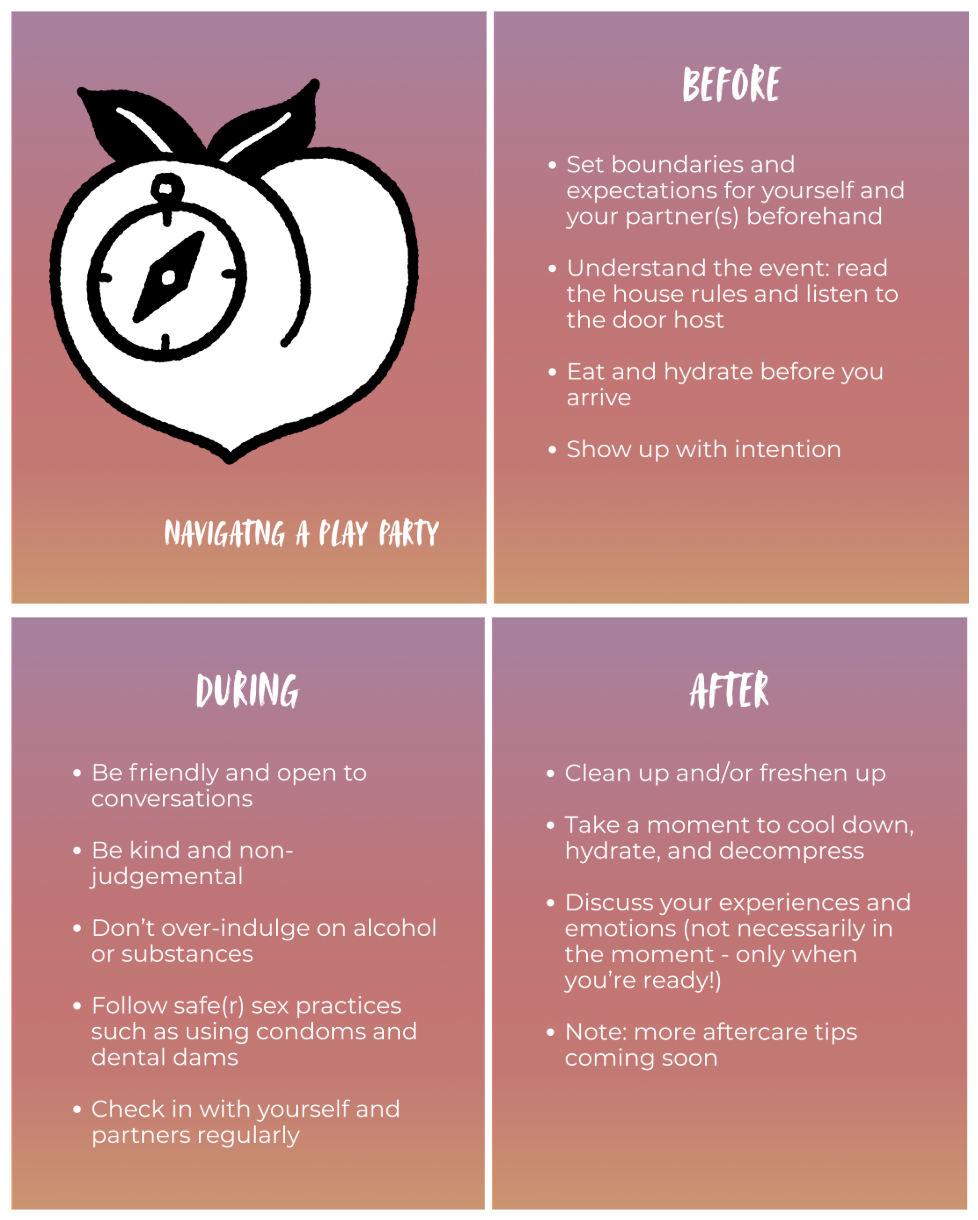
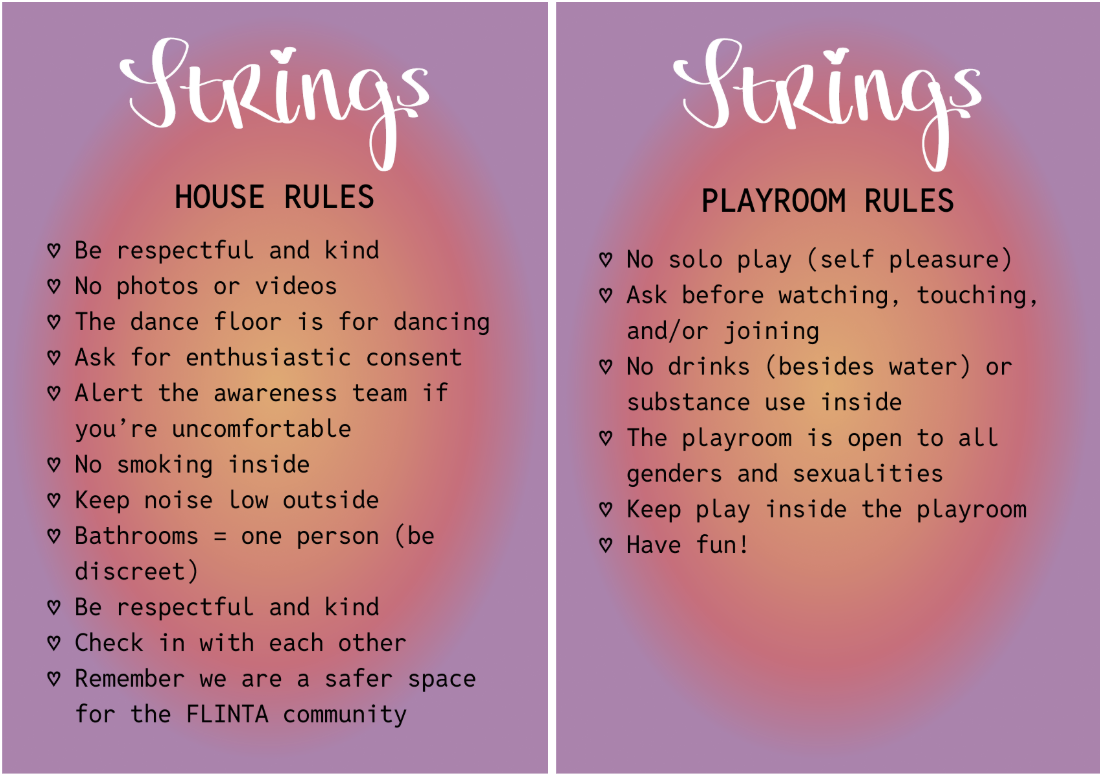
Our main goal for the night was to make everyone feel safe and comfortable (and hopefully sexy), whether it was their first time at a sexy party or their 100th. This was also communicated via our Instagram as well as some house rules and playroom etiquette that we printed out and posted around the venue.
Overall, despite some behind-the-scenes stress, the night was a great success, and we received overwhelmingly positive feedback from our attendees. The workshop was a particular highlight (a huge shoutout to our dear friend Jessie for being such an incredible speaker and host!), and during our many walks around the venue, we were delighted to see the play spaces filled with activity throughout the evening.
Perhaps the greatest testament to the community we built was that we didn't have to turn anyone away at the door, and our awareness team didn't receive a single report. By being intentional about who we invited and how we set expectations, we created an environment where people feel safe, respected, and free to connect - and that is why we choose to keep doing it!